Bike Pedals 101
Everything you need to know before buying pedals!
Buying Guide
Water, tools, snacks, layers: where it all goes depends on how long and how rough your day is.
This one comes down to a simple trade: how much stuff do you need, versus how much do you want strapped to your back while you're throwing the bike around. Both hip packs and backpacks have a clear place in a Fernie rider's kit, often both, depending on the day.
Section 01
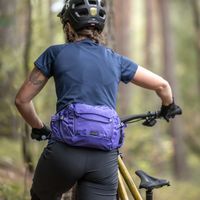
Worn around your waist, hip packs keep weight low and off your shoulders, which means your back stays freer to move, noticeable on rowdier terrain where body english matters.
Capacity is limited: there's only so much room for a spare layer, food, and tools before it gets bulky or starts to ride up. Most hip packs carry water via a small bladder or a single bottle, which may not be enough for a hot, long day.
Section 02
The classic choice for longer days: more volume, more water capacity, and dedicated organization for tools, layers, and snacks.
More weight on your back changes how the bike feels underneath you, especially on technical, low-speed moves where body movement matters. A sweaty back is also just part of the deal, though most packs now use a ventilated back panel to manage it.
Section 03
| Ride type | Pick |
|---|---|
| Quick after-work lap | Hip pack, or nothing if your bike has a bottle cage and tool mount. |
| Bike park day | Hip pack: keep your back free for jumps and berms. |
| Half-day trail ride | Either, depending on temperature and how much water you'll need. |
| All-day epic / alpine | Backpack: water capacity and layer storage become non-negotiable. |
| Shuttle-assisted DH days | Hip pack for the lap, backpack stashed at the shuttle for the rest of your gear. |
A lot of riders end up owning both and choosing based on the day. There's no rule that says you have to commit to one system.
Section 04
The non-negotiables, regardless of pack size: spare tube, tire lever, mini pump or CO2, multi-tool, and a way to carry water. Everything else scales with ride length.
Water, basic repair kit, phone, snack. That's it: keep it light.
Add a spare derailleur hanger and quick link if you're riding far from the trailhead, a packable rain layer (mountain weather changes fast), extra food, and a basic First Aid kit. If you're heading somewhere with limited cell coverage, let someone know your planned route and return time. No pack replaces that.
Our hip pack range covers minimal single-bottle packs up to larger waist packs with bladder capacity, and our backpacks span 1.5-3L hydration packs through to back-protector-equipped trail and enduro packs from EVOC and Fox Racing, and Deuter; think EVOC's Hip Pack Pro and Stage series, or Fox's Utility hydration packs. Browse packs online or come try a few on loaded. Fit changes a lot once there's weight in it.
Hip packs win on freedom of movement for shorter, rowdier days. Backpacks win on capacity for longer missions. Match the pack to the ride, not the other way around.
Come check out our range in-store. We'll help you find one that doesn't bounce, ride up, or fight you on the trail.